Posted on Leave a comment

What is Ban’ei? Learn about this Japanese Horse Race

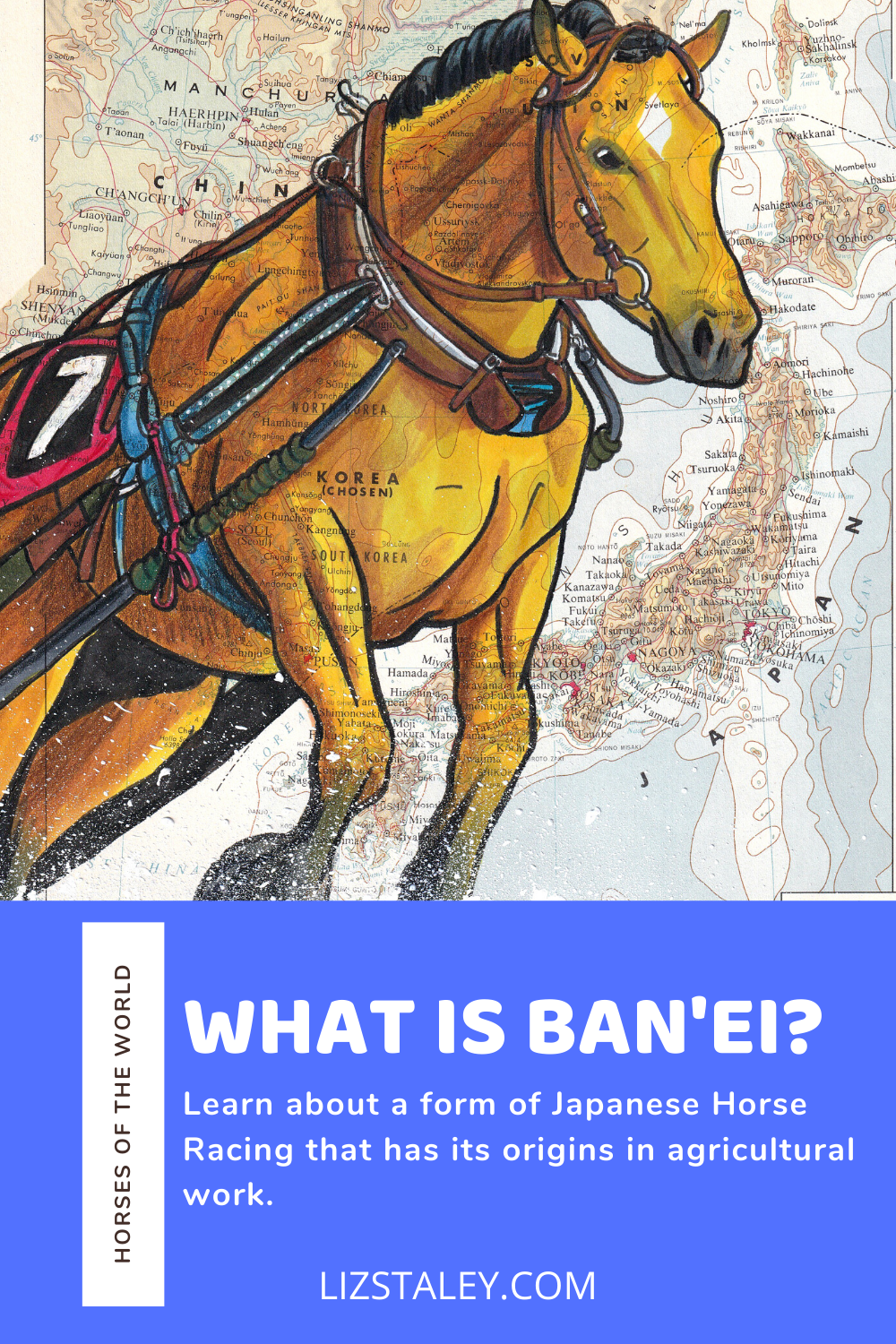
Banei Kyoso (literally “pull race”) is a Japanese horse race that has its probable origin in agricultural work. Draft horses are used to pull heavy sleds up sand ramps, in the way that horses were used to pull farming machinery and sleds of wood, while jockeys balance on the sleds. Eventually, the strength and speed of these horses were tested in festivals in the late Meiji Era. 

The popularity of the races grew, and by 1953 Hokkaido’s four cities of Kitami, Asahikawa, Iwamizawa, and Obihiro began to manage races. The former three closed up racing operations in 2007 because of declining revenues. Obihiro is now the only active racecourse and hosts races most Saturdays, Sundays, and Mondays. The Obihiro racecourse nearly closed in 2006 before Softbank, a Japanese mobile phone company, bailed them out and provided funds to continue races. Rakuten, Sapporo Breweries, and other companies have also added their sponsorship and several other programs have been started, including a race-sponsoring initiative for individuals. In addition to the regular weekend races, special occasions are also marked with ban’ei. There are many regional races too, known as ban’ei koshien.

A ban’ei course is 200 meters (660 feet) of dirt track with rope-separated lanes in the sand. There are ten lanes in a track, each with a starting gate and two hill-shaped obstacles. The second obstacle is a steeper hill called the Ban’ei Point. Horses pull heavy sleds, weighing from 450 kilograms (990 pounds) to 1 ton, down the track while jockeys stand on the sleds and steer the horse with a set of long reins. The amount of weight a horse must pull is determined by several factors. Young horses and mares pull less weight than older horses and stallions. The horse’s group and rating, determined by previous winnings, further determines the weight of the sled. 

Ban’ei racing is about strength, not speed. Because of this, the horses used in Ban’ei are often purebred on crossbred Belgian, Breton, or Percheron draft horses. There is also a Japanese draft horse, which was created by crossing purebred and half-bred horses together for five consecutive generations. Ardennes, Clydesdale, Shire, Brabancon, Breton, Boulonnais, Belgian, and Percheron horses have been cleared for this breeding program. Japanese draft horses that aren’t used in ban’ei racing are usually used in horse meat production. 
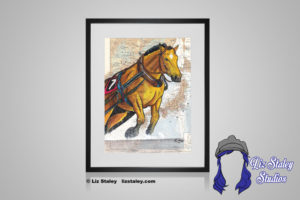
Purchase a Ban’ei art print by clicking the image above!


I first learned about Ban’ei racing from an anime called Silver Spoon that I watched on Netflix a few years ago. I found the slow horse races that emphasized strength instead of speed to be pretty fascinating! When I started doing research for adding a ban’ei horse to the Horses Of The World, I was uncertain about it at first. Because all of the horses up to this point had been a specific breed, and ban’ei racing isn’t limited to one breed of horse, I wondered if it “fit” into the series. However, I ultimately decided to include the Ban’ei horse because I believe it’s a unique event that is on the verge of extinction, so I wanted to be able to spread awareness of it in even some small way. 

Did you know about Ban’ei racing before? If not, share this post with your horse-loving friends using the buttons below!
Posted on Leave a comment

What Makes A Shetland Pony? History and Facts about the Shetland Pony Breed

Northeast of mainland Scotland lay the Shetland Isles, where small horses have been kept since the Bronze Age. People who lived on the islands likely crossed the native stock with imported ponies from the Norse settlers and also with Celtic ponies. The harsh climate and food scarcity made the Shetland ponies develop into an extremely hardy breed. Shetlands have small heads, widely spaced eyes, and small and alert ears. A short, broad back and deep girth are universal characteristics of the breed. They are hairy little ponies, with long thick manes and tails and a dense double winter coat. They can be nearly any color, though only crossbreeds can be leopard-spotted or champagne. 

Shetland ponies are usually gentle, good-tempered, and highly intelligent. They make very good ponies for children and are sometimes noted for their bravery. Because of their intelligence and size, they are easily spoiled and headstrong unless properly trained. The Shetland is the strongest of all horse and pony breeds in relation to its size, able to pull twice its own weight in comparison to a draft horse that can pull around half its own weight. It is not unusual for a Shetland Pony to live thirty years or more. However, their small size can also predispose some to heart problems. 

Shetland ponies were first used for pulling carts, carrying peat and other items, and plowing farm land. As the Industrial Revolution increased the need for coal in the mid-19th century, thousands of Shetland Ponies were sent to mainland Britain to work underground carrying coal for what would likely be their entire – often short – lives. Some coal mines in the Eastern United States also imported Shetland Ponies for work. The last of these pony mines in the U.S. closed in 1971. 

Today, the Shetland Pony is ridden by children and are shown by both children and adults at horse shows and in harness driving classes. They can also be found giving pony rides in commercial settings such as fairs and carnivals. Some petting zoos and therapeutic riding programs also use Shetlands in their programs. Miniature Shetlands, as well as other miniature breeds, can also be trained as guide horses.

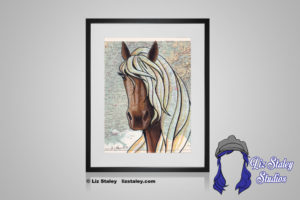
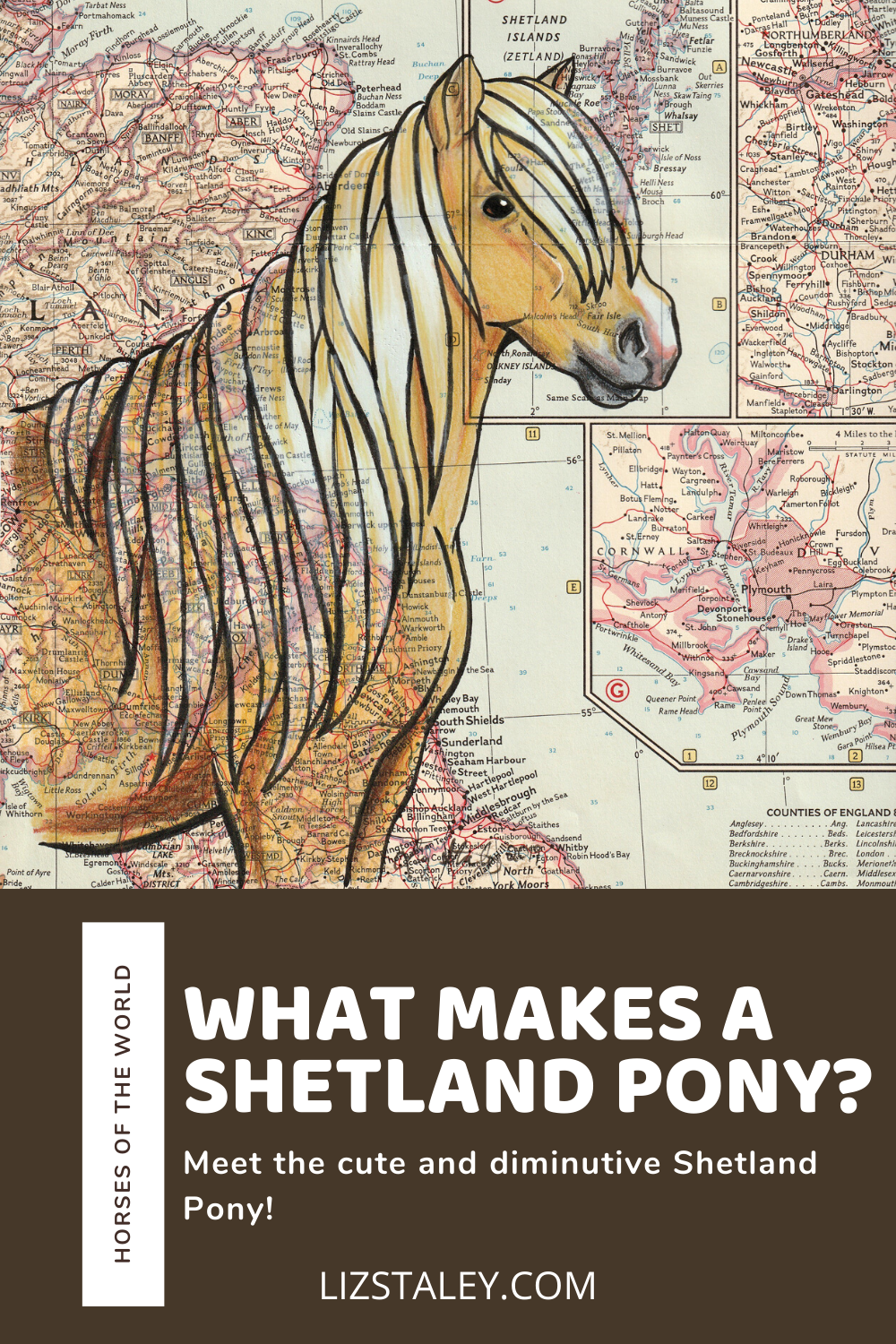
Do you love the Shetland Pony breed? Click the photo to purchase an art print!


I had gotten several requests for the Shetland Pony at events and from my on-line fans as well, and I was delighted to find this map that actually has an inset of the Shetland Isles on it! It seemed like fate and I knew that I had to draw the adorable little Shetland on this map. One of my favorite things about drawing horses is manes – I just love long, flowing manes and tails – so drawing a cute hairy little Palomino pony with a long mane was so enjoyable. I think this guy is so cute and I love how this illustration turned out!

Do you or someone you know love the Shetland Pony? Use the buttons below to share this post with them!

Posted on Leave a comment

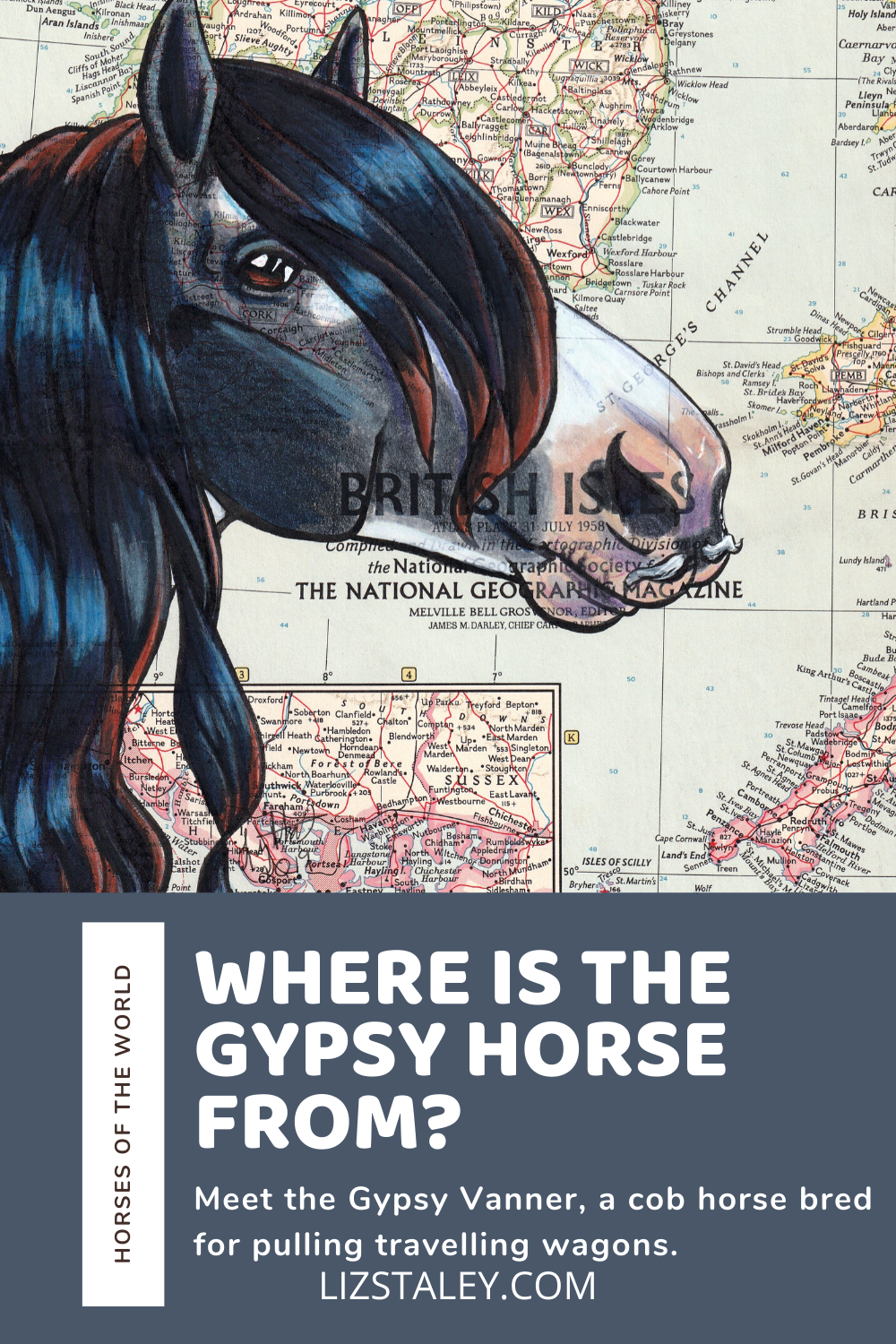
Where is the Gypsy Vanner horse from? History and Info about the Gypsy Vanner horse breed!

In the Islands of Great Britain and Ireland, a small, solidly-built, and often “piebald” colored horse was developed by the Romanichal Travellers to pull the Vardoes in which they lived and traveled. This horse came to be known as the Gypsy Cob, Irish Cob, Gypsy Horse, or the Gypsy Vanner. The Romanichal people arrived in the British Isles around 1500 AD, but did not start living in the vardo wagons until around 1850. Peak usage of the caravan wagon occurred in the late 19th century and the first two decades of the 20th. 

Pulling a vardo takes some unique training and management of horses, and requires a horse with specific characteristics. Vardo horses are trained not to stop until they get to the top of a hill, because otherwise it may not be able to get the wagon started again. Training begins at an early age, with the young horse tied to the offside of the trace ring on the collar of the horse pulling the wagon. To keep a fearful horse from seeing over the top of his blinkers, an old hat is sometimes placed on top of the horse’s head. Vardo horses were usually in great body condition due to the combination of exercise, grazing a variety of vegetation, and good quality care. The horse was considered part of the family, and lived in close proximity with its owners. 

The Gypsy horse as we know it today began taking shape shortly after World War II. When the British Roma began using animals to pull wagons, they used mules and any unwanted horses of a suitable breed to do the job. Later, these included horses that had fallen out of fashion in mainstream society, including a significant number of Shire horses. Many spotted horses ended up with the Romanichal breeders and were considered a valuable status symbol within the culture. The initial greater height of the Gypsy Vanner breed is derived from the influence of Clydesdale and Shire horses. The Romani people who developed the Gypsy Vanner horse communicated pedigree and breed information orally, so information on the foundation stock is mostly anecdotal. 

Do you love the Gypsy Vanner horse breed? Click the image to purchase a print!


The Gypsy Vanner horse for my Horses Of The World Series is one of the few where I was able to take the reference photo for the drawing myself. I met this Gypsy horse at a local event I was selling my art at and instantly fell in love. I asked permission of the owner to take a photo of the horse and use it as a reference for the image. It was a joy to meet this sweet guy, and to draw his likeness for this illustration!

Do you know someone who loves the Gypsy Vanner horse? Share this article with the buttons below!

Posted on Leave a comment

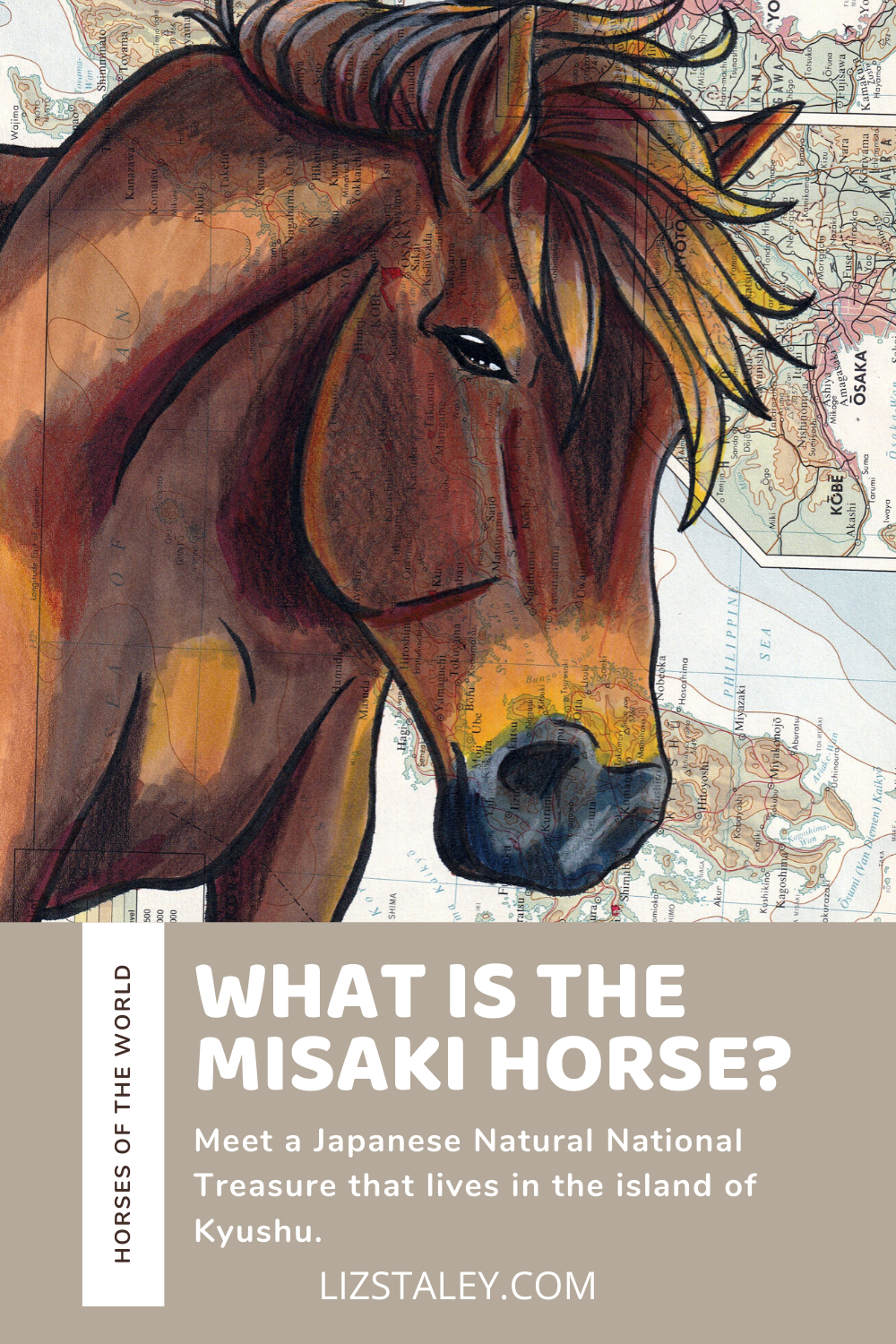
What is the Misaki Horse? Meet a Japanese National Natural Treasure!

The Misaki horse is a small, dark-colored horse breed in Japan that is critically endangered. It is one of eight native Japanese horse breeds, and is a feral horse that lives in a designated National Monument on Cape Toi (Toimisaki), on the island of Kyushu. 

Japanese horses are thought to descend from stock brought and different times from various parts of the mainland of Asia. The first of these importations took place, at the latest, in the 6th century. Horses were used as pack animals for farming, not draft power. They were also used in warfare. The horses were not large, as evidenced by 130 horse remains that have been excavated from battlefields dating back to 1185-1333 AD. The Misaki breed was first identified in the historical record in 1697 when the Akizuki family rounded up feral horses and developed a breeding stock.

The horses are a popular draw for tourists in the area where they live. Both the Misaki and the Cape Toi are were declared a Natural Monument in 1953. The Misaki is also a Japanese National Natural Treasure, which puts it under the Law for the Protection of Cultural Properties.

In 2007, the Misaki was classified as “critically maintained”. The population is approximately 120 animals, up from a low of 53 recorded in 1973. 

Do you love the Misaki horse? Purchase a print by clicking the image above!


I absolutely love Japan and so the chance to illustrate a Japanese breed could not be passed up! After doing research on several of the Japanese breeds, I decided on the Misaki because I was touched by their classification of critically endangered and that they are one of the rarest horse breeds in the world. I imagine the Misaki horse in my illustration to be looking at a human tourist, curious but also full of wild beauty.

Have you ever heard of the Misaki horse? If you know someone who would love to learn about this breed, share this post with them using the buttons below!

Posted on Leave a comment

What is the Tennessee Walking Horse Used For? Facts and History of the breed!

The Tennessee Walking Horse is a popular horse for riding because of its calm disposition, smooth gaits, and sure-footedness. They are often seen in the horse show ring, but are also popular pleasure and trail riding horses in both the English and Western riding styles. The breed is best known for its running-walk gait, a four-beat gait with the same pattern as a regular walk, but significantly faster. While a regular walk is around 4-8 miles per hour, the running-walk has been clocked at 10-20 miles per hour!

The Tennessee Walker was developed from a cross of Narragansett Pacer and Canadian Pacer horses that were brought from Kentucky to Tennessee starting in 1790, and with gaited Spanish mustangs imported from Texas. These horses were originally known as Tennessee Pacers, and were known for their smooth gaits and their agility on the rocky Tennessee terrain. Over the years, other breed blood was also introduced to the line, including Morgan, Standardbred, Thoroughbred, and Saddlebred.

In 2000, the Tennessee Walking Horse was named the official state horse of Tennessee. As of 2005, 450,000 horses have been registered with the Tennessee Walking Horse Breeders’ and Exhibitors’ Association. (TWHBEA) 

The showing, sale, and exhibition of Tennessee Walking Horses and some other breeds is governed by the Horse Protection Act of 1970. This act was put into place due to concern and public outcry about the practice of soring, which some unscrupulous owners use to exaggerate the leg motion of gaited horses in order to achieve the “Big Lick” motion. Soring is the practice of cutting or burning the outside of the leg to cause pain, or the use of tack or screws that cause pain. The Horse Protecting Act prevents anyone from entering a sored horse into a show, sale, auction, or exhibition, and prohibits drivers from transporting sored horses to a show or sale. Although the practice has been illegal for more than 40 years, soring is still practiced by some inhumane handlers. Some trainers trick show inspectors by training their horses not to respond to pain when their legs are touched for inspection, or use a topical anesthetic that allows the horse to pass inspection but wears off before the horse enters the show ring. Pressure shoeing is also used, with eliminates the use of chemicals altogether. Shoeing rule controversies, soring concerns, and the breed industry’s compliance with the Horse Protection Act has resulted in multiple governing organizations for shows. 

Love the Tennessee Walking Horse? Click the image to purchase a print!


The Tennessee Walker is most famous for being seen in the show ring, where it often performs saddleseat style English riding, but it is also a very popular trail riding horse because of its surefootedness. The breed has also been featured in television, movies, and other performances. The Lone Ranger’s horse, “Silver”, was at times played by a Tennessee Walking Horse.

The Tennessee Walker is one of the most requested breeds that I get for the Horses Of The World series, so I was happy to add it to the list of breeds on offer! They are an amazing breed with some very passionate fans, and I love to meet the TWH owners and hear them talk about their horses. When I found the map that I used for the Tennessee Walker illustration, I loved the soft greens that were present on the map and decided that drawing a lovely chestnut would complement the green well. My TWH illustration is meant to capture the movement of the “running-walk” and the proud, elegant position of the neck. 

Do you know someone who loves the Tennessee Walking Horse? Share this post with them using the buttons below!

Posted on Leave a comment

Is the Brumby horse a pest or part of Australia’s heritage? Meet Australia’s feral bands of Brumbies

Horses first arrived in Australia in 1788, imported for farm and utility work since recreational riding and races were not major activities. It is thought that only around 200 horses had reached Australia by 1800. In 1810, horse racing became popular in Australia, which then resulted in an increase of imports of Thoroughbred horses. By 1820 there were roughly 3,500 horses living in Australia. This number had grown to 160,000 by 1850. Because of the long trip from Europe to Australia, only the strongest horses survived. This made for a healthy and strong Australian stock, which aided in their ability to flourish. 

The Brumby horse breed came about because of horses escaping from their owners and becoming feral. The first report of an escaped horse was in 1804. By 1840, more horses had escaped from the settled areas of the continent. It is very likely that some escaped because of improper fencing or a lack of fencing. But many horses became feral because they were released out into the wild by their owners to fend for themselves. Arid conditions in Australia made farming difficult, so it is likely that some feral horses came from people abandoning their settlements and giving up on trying to farm in the unfamiliar country. After World War I, as in many other areas of the world, the rise of mechanization led to less need for horses in the military and in farming, which led to the growth of unwanted animals who were set free to increase the feral population.

Australia currently has around 400,000 horses roaming free. Despite the large population numbers, the feral horses are only considered to be a moderate pest. If they are allowed to damage vegetation and cause erosion, their environmental impact can be devastating. However, they also have cultural and economic value, which makes their management a complex issue for all those involved. Public concern is a major issue in control efforts, as many people advocate for the protection of the Brumby. This includes the Aboriginal people, who believe feral horses belong to the country. Some organizations are totally against culling, while some accept necessary and humane culling methods to control environmental damage caused by the Brumby bands. The issue is complicated, at best, with passionate people on both sides of the debate.

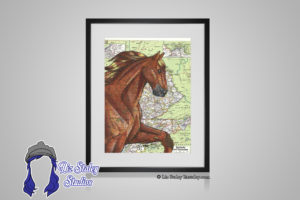
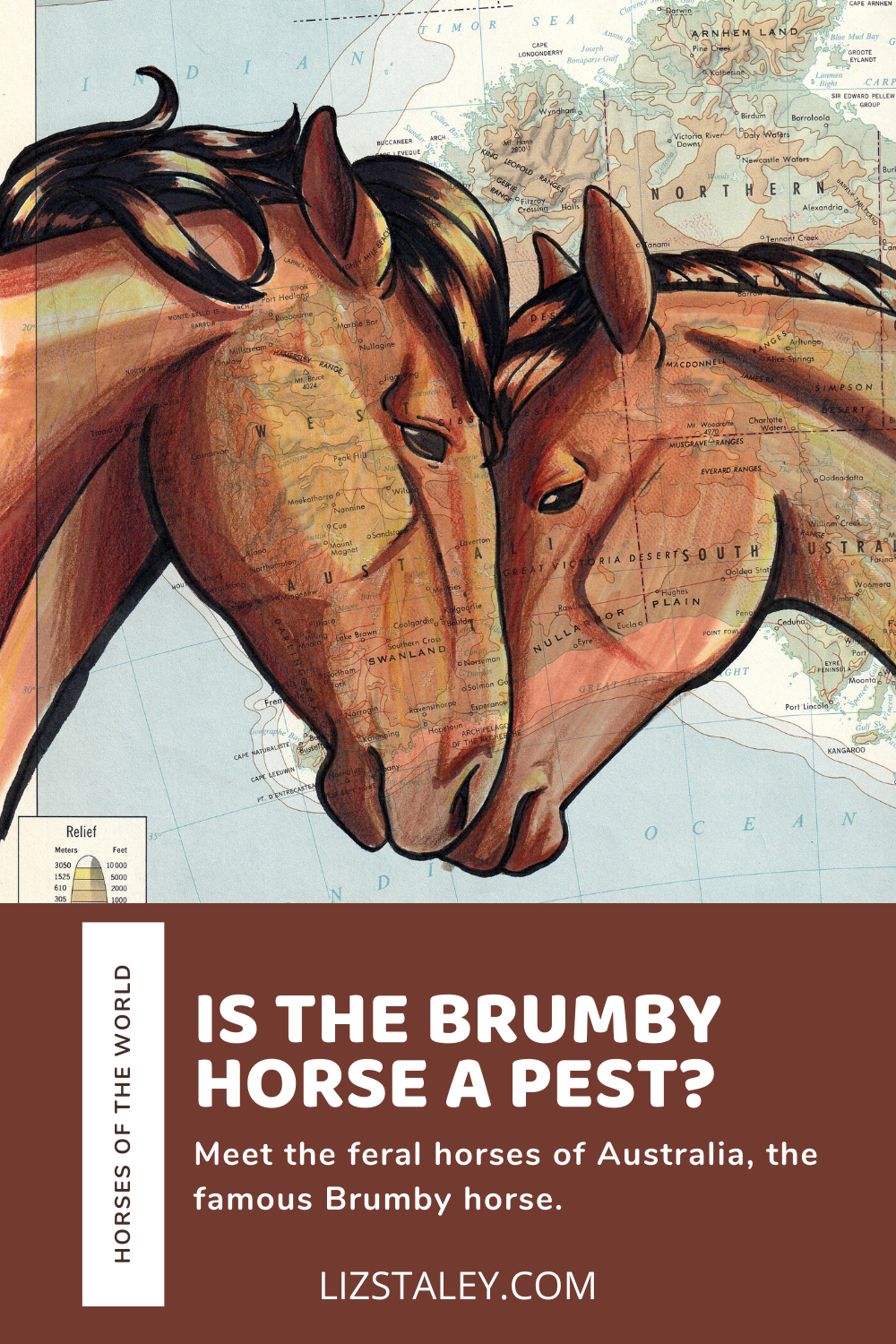
Love the Brumby horse breed? Click the image to purchase a print!


I’m not Australian, so I don’t feel that I can really comment on whether or not the Brumby is a pest. However, I do feel that any animal population that needs to be managed should be done so in humane and responsible ways. Especially animals that are only on a continent because humans abandoned them there! There are several organizations that advocate for the preservation and humane management of the Brumby horse, including SaveTheBrumbies.

The Brumby image for the Horses of the World series was one of the first where I illustrated two horses in one image. I think it’s a very sweet image, and have had several sales of it just because of the emotion in the image. I love being able to teach people about breeds they aren’t familiar with, so creating a striking image that starts a discussion is very important to me!

Know someone who loves the Brumby horse? Share this post with them using the buttons below!

Posted on Leave a comment

Where is the Rocky Mountain horse breed from? The answer may surprise you!

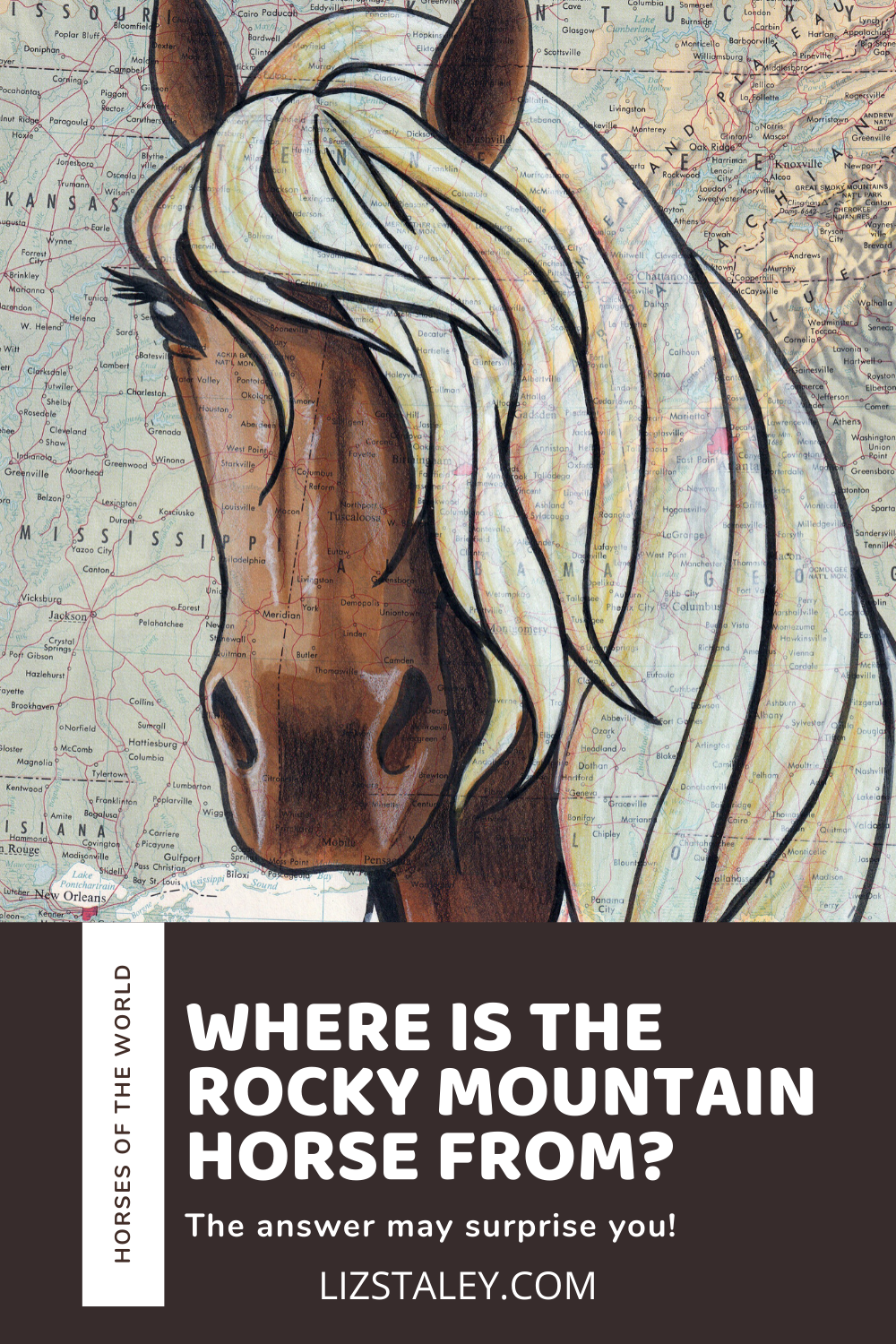
Every Horses Of the World art piece begins with research into the breed so that I can look for a map, research the history and the characteristics of the breed, and also find reference images so I can be sure to capture that breed correctly. When it came time to do the Rocky Mountain horse, I thought for sure that I knew what map to use. “Rocky Mountain” is in the name, right? That tells you where the breed came from! But I decided before putting pencil to map-page that I would do my normal process and do some research first. 

Imagine my surprise when I learned that the Rocky Mountain horse originates from … Kentucky! Despite its name, the Rocky Mountain horse did not develop in the Rocky Mountains, but the Appalachian Mountains instead. A foundation stallion was brought from the western United States to eastern Kentucky around 1890, which started the breed. In the mid-20th century, another stallion named Old Tobe, was used to develop what we know as the modern Rocky Mountain horse. The breed has over 12,000 registered horses, and is known for its chocolate-colored coat and flaxen mane and tail that is seen in much of the breed’s population. Rocky Mountain horses also have a four-beat ambling gait known as the “single-foot”, which replaces the trot that is seen in the majority of other breeds. The single-foot is an intermediate speed between the walk and canter, but is a four-beat gait while the trot is a two-beat gait. This gait is extremely smooth for the rider because it minimizes movement through the top of the horse and removes the bounce that is present in a two-beat gait. 

Love the Rocky Mountain Horse? Click the image to purchase a print!


Eastern Kentucky is known for its gaited breeds that are created from mixing Spanish horses with English horses. The American Saddlebred, Tennessee Walking Horse, and Missouri Fox Trotter are also from the same general geographical area as the Rocky Mountain Horse. The breed was originally developed for general farm use, including pulling plows and buggies, working cattle, and being ridden under saddle. Today, the Rocky Mountain Horse is still used for many of the same activities, as well as endurance riding and pleasure riding. The easy disposition and smooth gait make this breed especially sought out be elderly and disabled riders.

If you know someone who loves the Rocky Mountain horse, share this post with them using the buttons below!

Posted on Leave a comment

Is the Akhal-teke the Most Beautiful Horse Breed in the World?

The Akhal-teke is thought to be one of the oldest existing horse breeds. They are from Turkmenistan, and have a reputation for speed, endurance, intelligence, and are known for the distinctive metallic sheen to their coat. This sheen to their coat has earned them the nickname “Golden Horses”. There are currently around 6,600 Akhal-tekes in the world, mostly in Russia.

The ancestors of the Akhal-teke breed may date back to animals living as much as 3,000 years ago. Their precise ancestry is difficult to trace because prior to around 1600 AD, horse breeds as we know them today did not exist. Instead, horses were identified by local strain or type. The Akhal-teke breed is possibly the direct descendant of the Turkoman horse, a breed that is believed to be extinct. The Turkoman horse breed may share a common ancestor with the Arabian horse. 

Tribal peoples in what is Turkmenistan today used the Akhal-teke horses first for raiding. Horses were treasured possessions, crucial to income and survival. Horses were selectively bred, and their pedigrees were kept via an oral tradition. The horses were managed and trained in very specific ways, with stallions being kept tethered next to tents while mares and foals were allowed to seek forage. Stallions were covered head to tail in layers of felt – up to seven layers at a time – which kept their coat short and shiny. Before raids, the horses were put on a sparse diet to prepare them for the long ride through the desert. At this time, the horses were called “Argamaks” (Divine or Sacred) by the Russians. The Argamaks were highly prized for their speed, stamina, and loyalty. 

In 1881, Turkmenistan became part of the Russian Empire. The tribes fought against this, but eventually lost. However, the Russian general Kuropatkin developed a love for the golden horses he’d seen while fighting the tribes. He founded a breeding farm and renamed the horses as “Akhal-teke” after the Teke Turkmen tribe that lived around the Akhal oasis.

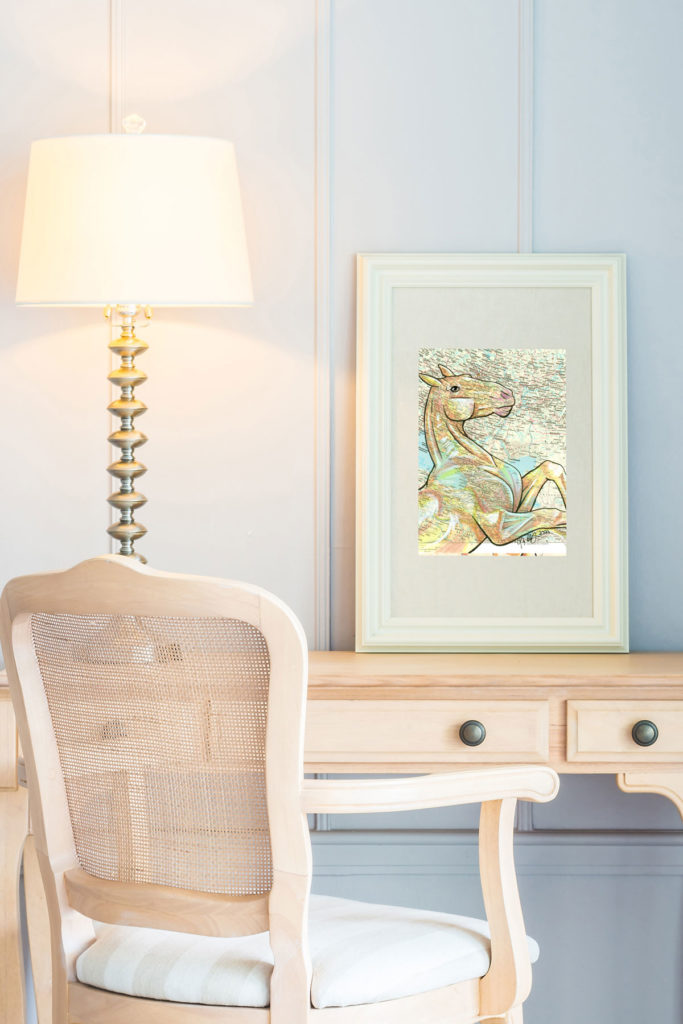
Image of a room with a white desk and chair in front of a white wall. A lamp is on the desk. A framed image of a drawing of an Akhal-teke horse is on the desk
Love the Akhal-teke breed? Click above to purchase a print!

The ancestral Akhal-teke has had an influence on many other horse breeds, including possibly the Thoroughbred. The Trakehner breed has also been influenced by the Akhal-teke, as well. The breed nearly died out when the Soviet Union required horses to be slaughtered for meat. At one point there were only 1,250 horses left, and their export from the Soviet Union was banned. In the early twentieth century, cross-breeding between the Thoroughbred and Akhal-teke was attempted in an effort to create a faster long-distance racehorse. These horses were not as resilient as their Akhal-teke ancestors, and many of the Anglo Akhal-tekes died because of the harsh conditions in Central Asia.

The Akhal-teke has a distinct sheen to its coat that makes it look like it is made of gold. Many people say that they are the most beautiful horses in the world thanks to this metallic sheen, as well as their refined and elegant build. The structure of the Akhal-teke’s fur is the cause of the shimmer thanks to it acting as a light intensifier. It is believed that the golden coat helps act as camouflage in the deserts of Turkmenistan.

Today, there are only 3,500 Akhal-teke horses in the world. 

I am fascinated by the Akhal-teke breed. They are truly gorgeous and if you’ve never seen a photo or video of one, go to Google right now and look them up. They look like living metal statues and they are just GORGEOUS. When I started the Akhal-teke drawing for the Horses Of The World Series, I knew that capturing that golden sheen would be a challenge, especially when illustrating on a vintage map. This piece is one of my favorites in the series, though. I like it so much, in fact, that I had this piece printed on canvas to use as a large patch for the back of a jacket! I especially love how the golden horse drawing seems to almost blend with the colors of the map. Perhaps there is truth to that thought of the coat color being used for protection in the desert!

Do you love the Akhal-teke? Share this post with others using the buttons below!
Posted on Leave a comment

Where did the Morgan horse come from? Facts and History about the Morgan horse

One of the earliest horse breeds developed in the united states, Morgans had many uses in 19th century American history. They were used as coach horses, in harness racing, for riding, and even as Cavalry horses during the American Civil War. Other American horse breeds that have been influenced by the Morgan include the American Quarter Horse, the Tennessee Walking Horse, and the Standardbred. The Morgan is a compact and refined horse, with strong legs, an expressive head with large eyes, and a well-arched neck. They have a reputation for being intelligent, courageous, and having a good disposition. 

All Morgans trace back to one foundation sire, a stallion named Figure. Figure was born in West Springfield, Massachusetts, in 1789. In 1792, Figure was given to Justin Morgan as payment for a debt. Figure was known for passing on his looks, conformation, athleticism, and temperament to his offspring. Although he was used extensively as a breeding stallion, only six of his sons have written records. 

By the 19th century, Morgans were a recognizable breed that was well-known for its diversity. They were the choice of many families who needed a horse to plow the fields, take the family to church and Sunday, and then take the Father to work on Monday. Morgans were heavily used in wagon trains moving west, as horses on cattle ranches, and by the US Army as cavalry mounts and harness horses.

In 1945, Marguerite Henry’s Justin Morgan Had A Horse was published. The book was a fictional account of Figure and his owner. Walt Disney Studios made a movie based on the book in 1972. Both the book and movie have been heavily criticized for not being accurate to the true history of Justin Morgan and his stallion. 

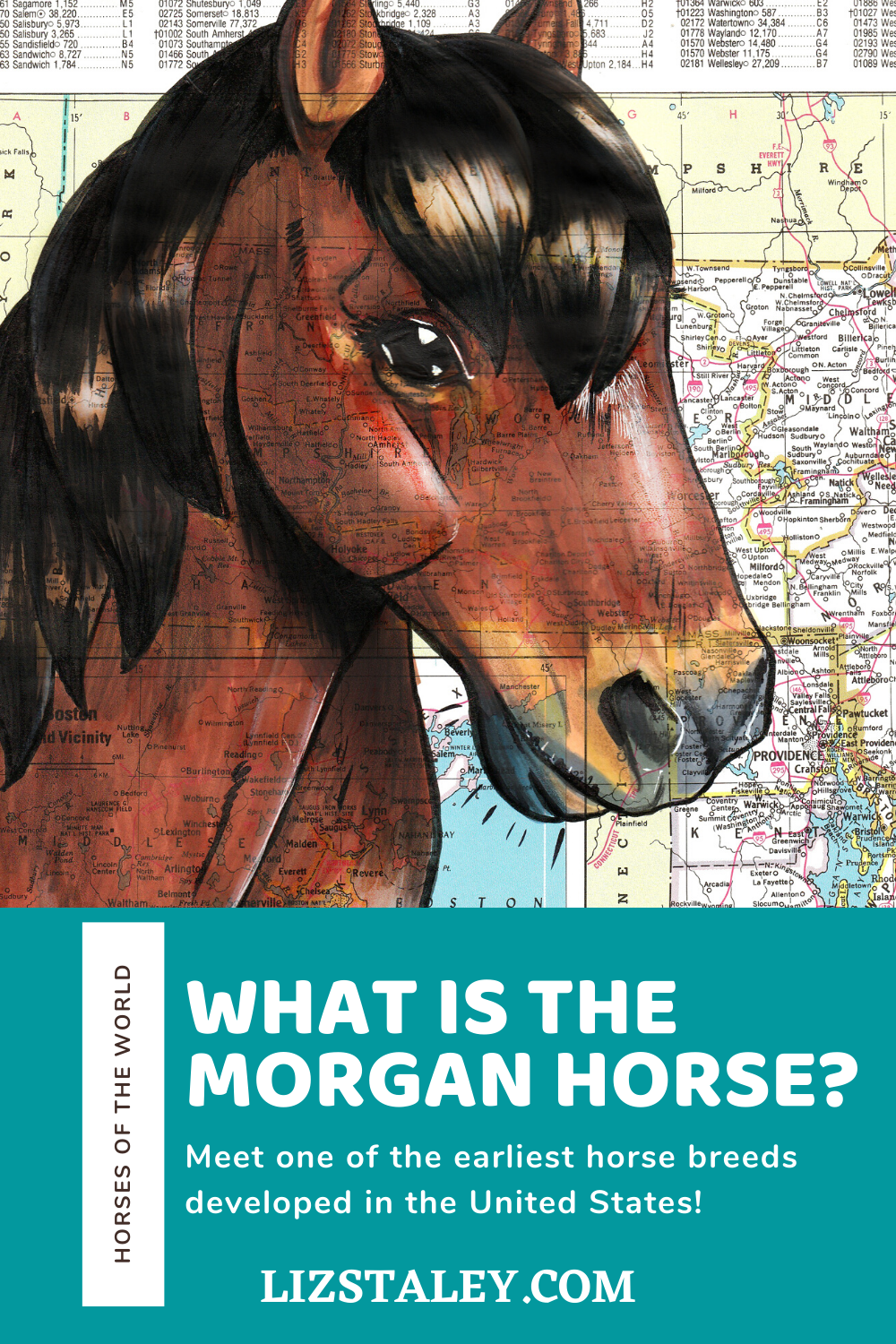
Love the Morgan Horse? Click the image above to purchase a Morgan print!

The Morgan horse is very special to me, because that’s the breed of horse I own! My pretty girl, who you may have seen in other blog posts of mine if you’ve been visiting my blog for a while, is a Morgan mare. My Morgan piece for the Horses Of The World series is also the only breed in the series that I’ve drawn more than once. Back when I did the first Morgan design, I was drawing my sketches directly on the map and then going over the pencil lines with ink. Unfortunately, it was VERY hard to see pencil lines sometimes on the map backgrounds, so when I inked the first version of the Morgan I wasn’t happy with the outcome. At the time I didn’t have another map of the area, so I let it be. But once I got new atlases in, I decided to try again and I’m much happier with the “2019” version of the design (shown above!)

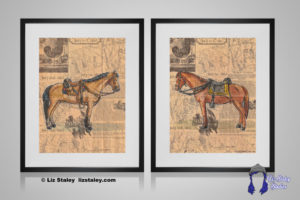
I have also used Morgans as models for the Civil War Cavalry horses on maps of Gettysburg that I did, as well. 

To purchase my Civil War Horses prints, click on the above image!


I knew nothing about the Morgan breed until I met my now-best-friend and the horse who would become my first horse, but in the past 7 years I’ve come to appreciate and truly love this breed! 

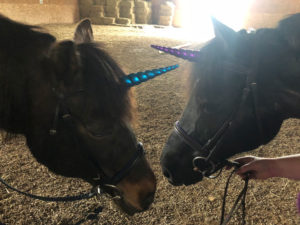
Our Morgan Unicorns, Glory and Raven


Posted on Leave a comment

What’s a Haflinger Horse? Meet a horse breed that traces its ancestry back to the Middle Ages!

The Haflinger (also called the Avelignese), derives its name from the village of Hafling in what-is-today Northern Italy. Haflingers are always chestnut in color, with shades that range from light golden to a rich chestnut or liver hue. The mane and tail are white. Before World War II they stood an average of 13.3 hands, but since the end of the war the average height of the breed has increased. All of today’s Haflingers trace their lineage through one of seven stallion lines to the foundation stallion, Folie. It is tradition to give colts a name beginning with the letter or letters associated with their stallion line, and for fillies to be given a name beginning with the first letter of their dam’s name. The exceptions to this are in France and Italy, where different rules apply.

There are two theories for the beginning of the Haflinger breed. The first is that Haflingers descended from the horses who were abandoned in the Tyrolean valleys in Central Europe by the East Goths, who were fleeing from the Byzantine troops in 555 AD. It is believed that these abandoned horses were influenced by Oriental bloodlines and may explain the Arabian characteristics present in the Haflinger. Another theory is that the breed descended from a stallion from the Kingdom of Burgundy sent to the area by Louis IV when his son married Princess Margarete Maultasch in 1342. It has also been suggested that the Haflinger may be descended from a prehistoric forest horse. Whatever the origins of the haflinger, the breed thrived in the harsh conditions of the mountain climate, even with minimal maintenance.

The modern Haflinger was officially established in the village of Hafling. An Arabian stallion was imported to Austria in the 19th century, strongly reinforcing the Arabian influence on the breed. Because of the small gene pool of the origins of the breed, and the mountain environment it developed in, the breed has a fixed physical type and appearance. World War I resulted in many Haflingers being conscripted for military service, which interrupted many breeding programs. After the war, South Tyrol (including Hafling) was ceded to Italy while North Tyrol remained in Austria. This was extremely detrimental to the breed, as most broodmares were in South Tyrol and most studs were in North Tyrol, and little effort was made at cooperation between breeders.

Love the Haflinger horse? Click the above image to purchase a Haflinger print!

After World War II, Haflinger breeding programs almost stopped entirely because the military stopped buying horses. It was decided that changes needed to be made to breeding to create a horse that better fit modern needs. The Tyrolean Haflinger Breeder’s Association was established and they implemented strict breeding protocols to increase the numbers of the Haflinger horses. Between 1950 and 1974, most horse breeds in Europe were decreasing in numbers, while the number of Haflingers were increasing. 

Haflingers were bred to be a versatile horse under saddle, but also still solid enough for draft work and driving. The breed is used today in many activities, including draft and pack work, harness and combined driving, and many under saddle events including western show classes, trail and endurance riding, dressage, showjumping, vaulting, and therapeutic riding programs. They are still used by the Austrian and German armies for rough terrain work.  In 2003, a Haflinger became the first cloned horse, which resulted in a filly name Prometea.

Do you love the Haflinger horse? Share this post with your friends!